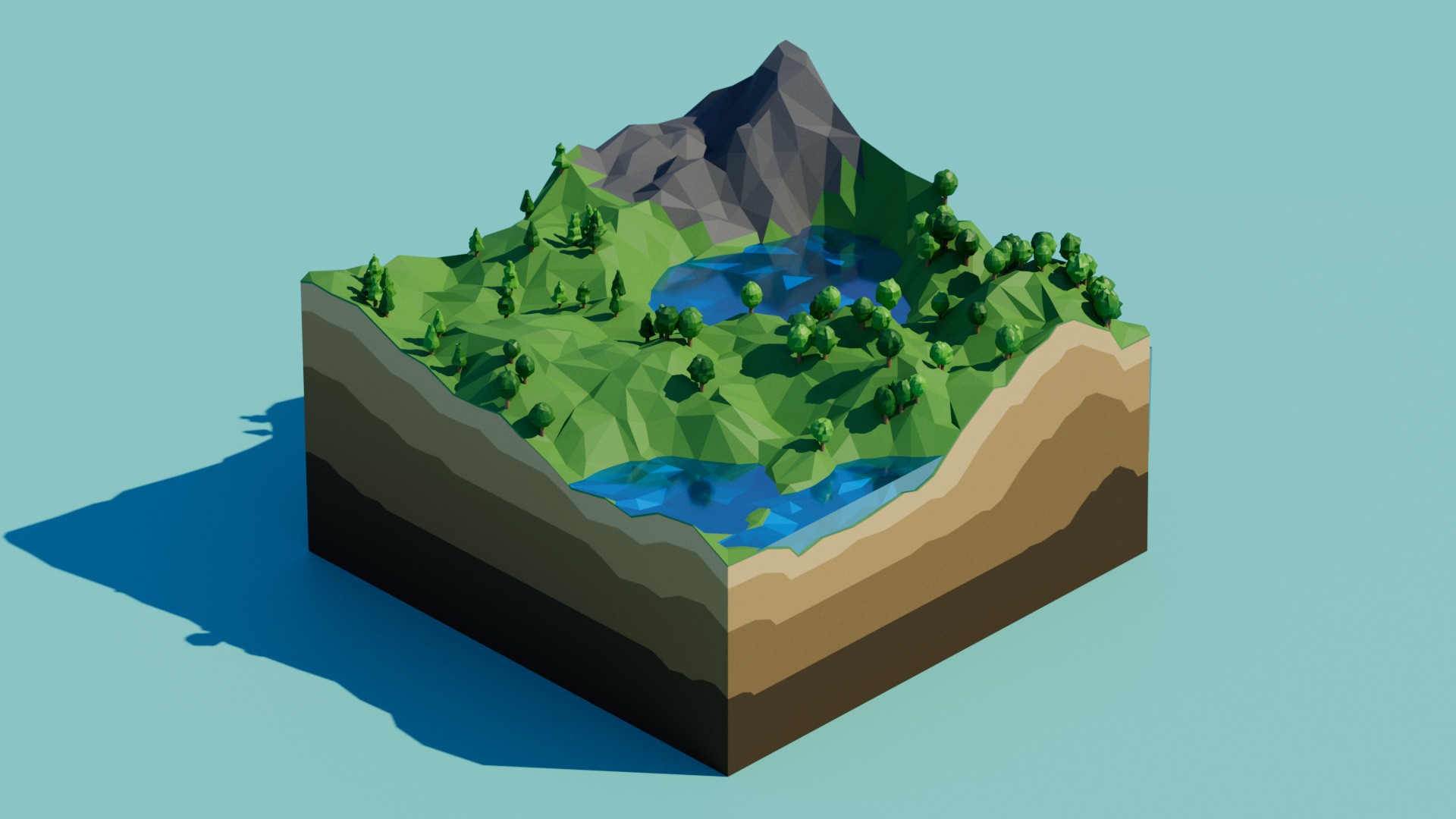

Making It Look Great 7 – MoGraph Unleashed

Posted in Cinema4D MoGraph, News on February 6th, 2010 by Tim

Making It Look Great 7 – MoGraph Unleashed will be available on Motionworks next week.

Comprising six unique collections of tutorials on the Cinema4D MoGraph Module. In total almost 8hrs of professional training.

Follow helloluxx or Motionworks on Twitter to hear news of the availability. As soon as the download is online it will be tweeted to you all.

Here is a brief description of each series to whet your appetite.

Starting with the creation of a simple logo model, then breaking it apart polygon by polygon, a techni-coloured interior is revealed. Lit using Global Illumination and powered by dynamic forces, watch thousands of tiny letters, each an individual light source, falling, colliding and bouncing. After studying this collection, you will control the power of dynamics with your fingertips.

Subjects covered include:
Rigid Body Tag
Plain Effector
Random Effector
PolyFX
Global Illumination

Whether you wish to recreate a realistic print style halftone effect or build a giant stadium jumbotron structure, this set of classes explores the numerous options available when working with image based source material. Combining the power of the MoGraph Cloner in Grid Array mode, explore the potential the Shader Effector has to offer. Once integrated with the Color Shader, you will unleash unlimited possibilities for your own projects.

Subjects covered include:
Sort Clones
Shader Effector
Color Shader
Formula Effector

Based upon the popular theme of heraldry, this series of tutorials will provide you with a variety of strategies to assist develop your ideas into real world projects. Link Effectors to regular Cinema4D objects to harness the power of MoGraph within your established animation techniques. Deform objects along any path with the Spline Wrap deformer. Animate multiple objects in sequence by utilising the Time Offset feature. This class is jam packed with a huge combination of techniques you will use on a day to day basis.

Subjects covered include:
Spline Wrap
Time Offset
Random Effector
Delay Effector
Xpresso Sample Effector Node
Stacked Materials
Stick Texture Tag
Step Effector

Working with Motion Capture files such as the FBX format, this series of tutorials take you step by step through various techniques for creating animated elements from captured motion. Watch your motion design advance to new grounds with many possibilities to create natural flowing movement with your graphic components.

Subjects covered include:
Spline Effector
Random Effector
Tracer

Need swarms of bees? Shoals of fish? Maybe you simply want to move with the crowd? This collection will point you in the right direction. Streaming with an abundance of opportunities, control the crowds of parameters with ease as you guide them towards your goal.

Subjects covered include:
Spline Effector
Step Effector
Delay Effector
Random Effector
Target Effector

Attach visible lights onto multiple object vertices and watch as your clones move to the rhythm of the beat. Channel the power of the inheritance effector as your objects morph from one object to another, leaving a trail of ever decreasing light that flicker through the falloff. This workshop will guide you through the intricacies of some of the often misunderstood and rarely used MoGraph tools, such as the Matrix Object, Instance Object, Sound and Inheritance Effector.

Subjects covered include:
MoGraph Instance Object
Matrix Object
Inheritance Effector
Sound Effector
Beat Shader
Displace Deformer
Multi Shader
Sketch & Toon

Tags: , , ,

Making It Look Great 7 – MoCap

Posted in Cinema4D MoGraph on January 25th, 2010 by Tim

Not long now…

Making It Look Great 7 – Coming Real Soon!

Thanks to Selcuk Can Guven for the sound design.

Making It Look Great 7 – MoCap from Tim Clapham on Vimeo.

Tags: , , , ,

Making It Look Great 7 – Flocking

Posted in Cinema4D MoGraph on January 14th, 2010 by Tim

Making It Look Great 7 – Coming Soon

Thanks to Selcuk Can Guven for the sound design.

Making It Look Great 7 – Flocking from Tim Clapham on Vimeo.

Tags: , , , , ,

3D World

Posted in Cinema4D MoGraph on January 13th, 2010 by Tim
3D World

3D World

The new 3D World magazine is on sale from today in the UK. I was offered the exciting opportunity of creating the cover artwork and a twenty second animation for this months issue.

3D World from Tim Clapham on Vimeo.

Working with Mark Allin, an old friend and my ex-business partner from HYPA. We both developed the concept and design of the piece. I then took the designs and worked up the 3D animation in Cinema4D and completed the composite and grade in After Effects. Thanks to Mark, who also created the sound design for the animation.

As part of the project, I wrote a 36 step tutorial that walks you through the processes to create something similar yourself. Please visit the 3D World official website to find out more and order your own copy.

Tags: , , , ,

Making It Look Great 7 – Dynamics

Posted in Cinema4D MoGraph, News on January 9th, 2010 by Tim

Making It Look Great 7 – Coming Soon.

Many thanks to Selcuk Can Guven for sound design.

Making It Look Great 7 – Dynamics from Tim Clapham on Vimeo.

Tags: , , , , ,

Which Data Type?

Posted in Cinema4D Misc on January 3rd, 2010 by Tim

When you are working with Xpresso in Cinema4D it is often important to choose the correct datatype. This is particularly true when you are creating user data for your objects.

Open the user data manager and choose to add data. The next thing you need to do is select the data type. Unfortunately if you go back to edit existing user data later you cannot change the data type specified, so it is preferable to create the correct data type in the first place.

User Data Manager

User Data Manager

Another time you need to know the correct data type could be if you are working with XGroups and need to specify your input and output ports. Again you will be presented with a list of names and all you really want to do is add a port for perhaps position, rotation or colour, etc.

XGroup Ports

XGroup Ports

One of the simplest methods to find the required data type is to add an xpresso node that already has a similar port. For instance, you may wish to add user data to an object to control position, to adjust radius or to create a checkbox.

Create a cube and drag it to the Xpresso window and add the ports like the images below. Then as you mouse over the ports, take a look at the lower left of the Xpresso window. Cinema4D will display some text that gives you the name of the port and also the data type used.

Kai Pederson made a very valid point in his comment below which definitely deserves a mention.

“Personally I hate having to look down there when I’m mousing over a port so I turn on bubble help, this way when I mouse over a port or a wire, it will show that information in the bubble help right where my mouse is.”

Thanks for the tip Kai.

Position : Vector

Position : Vector


Radius : Real

Radius : Real


Checkbox : Bool

Checkbox : Bool

So if you are unsure of the correct data type, simply find a node or object that has a similar type of parameter. You can then drag this object into Xpresso and create a port for that parameter. The status bar will then let you know the data type.

If all of this seems like a bit of a long winded method to find out this information, don’t worry! There is actually a really quick way to do this. If you have an object that already has the type of user interface that you need. Be this a checkbox, vector field, colour chooser, etc.

Copy User Data Interface

Copy User Data Interface

Right click on the element in the Attribute Manager, choose Copy User Data Interface. Now instead of choosing User Data > Manage User Data, choose Paste User Data Interface. The user data manager will open and the element you copied will be already created. You just need to adjust the parameters so they are more suitable for your needs.

Landscape Shading Kit

Posted in Cinema4D Misc, News on December 18th, 2009 by Tim

It was recently brought to my attention that a superb set of procedural shader presets has been made available to purchase. Eric Smit, the man behind this set creates some of the most stunning Cinema4D landscapes, so you can be sure of good quality with this product.

The LANDSCAPE SHADING KIT is a collection of 3D procedural Cinema 4D materials. 170 materials patiently designed to offer a high level of realism and flexibility. The whole kit is the most powerful solution for landscape texturing within Cinema 4D. It offers almost the same level of realism as photo based maps, without the limitations and frustrations of 2D mapping.

Landscape Shader Kit Example 01

Landscape Shader Kit Example 01

Created by Eric Smit, this looks to be an awesome collection and anyone who is working with Cinema4D to create landscapes should take a serious look at this collection.

Created with ease of use in mind, and for a very affordable price too.  Head on over to Eric’s website to read more about this stunning collection.

Landscape Shader Kit Example 02

Landscape Shader Kit Example 02

Tags: , , , ,

Sorted — Using the MoGraph sort options

Posted in Cinema4D MoGraph on December 8th, 2009 by Tim

In this short tutorial, I show you some more of the features available in the Cinema4D MoGraph module.

By using the Sort option in the Cloner, you can use Effectors to determine which clone from the hierarchy is displayed.

The Sorted option in the Random Effector allows you to use each child of the cloner the same number of times, or in combination with the multishader you can ensure the shaders are distributed evenly across your clones. Great for things like playing cards where you don’t want duplicate clones.

To find out more visit Vimeo and watch the tutorial.

Sorted! from Tim Clapham on Vimeo.

You can download the project file associated with this tutorial by clicking here.

Tags: , , , ,

Reflection Falloff?

Posted in Cinema4D Rendering on December 4th, 2009 by Tim

There was a question over at The Motion Exchange about how to create a falloff type effect with reflections in Cinema4D.

Well there are a few methods to achieve this, some are more accurate than others, but because of this, they are a little more costly with render times.

Reflection Blur

Reflection Blur

The first and perhaps the most obvious way is to use the reflection channel blurriness parameter. This will however increase your render times somewhat if you are after a smooth grain free result. Also it isn’t necessarily the result you may be after.

Reflection with Ambient Occlusion Shader

Reflection with Ambient Occlusion Shader

Another option is to use Ambient Occlusion in the reflection channel as Harry Frank from Graymachine shows here on The Motion Exchange. This is quite a cool trick, but again it can be a little slow to render.

Reflection using Distance Falloff shader

Reflection using Distance Falloff shader

There is also a shader available online that will allow you to achieve this called Distance Falloff. Possibly the least accurate way, but also the quickest. I think a lot of you will find this to be the answer when you want a quick result and have no problem with a little inaccuracy. Lucky for us the shader is written in c.o.f.f.e.e. so it still works fine with r11.5.

The guy who wrote this plugin all those years ago is Matt Savard. You can download the plugin with a simple example scene from here.

Thanks Matt for a really useful shader.

Tags: , , , , , ,

wordle – beautiful word clouds

Posted in Type on November 24th, 2009 by Tim

I came across a site recently and thought I’d share it here.

It is called wordle and it basically creates funky looking word clouds. You can generate them by adding in your own words, linking to a blog or website. Then you have some options for layout, font and colour palette.

I simply linked to the helloluxx blog and this is what it came up with. Pretty cool huh?

Visit wordle and make your own. Have fun!

helloluxx wordle cloud

helloluxx wordle cloud

Tags: , , , , ,